Why Men Project
Why don't men

Why don't men deal with conflict?

Why Don't Men — Understanding why men don't do certain things.

See if this sounds familiar…

When tension flares at home or in the workplace, your default response is to change the subject, walk away, or placate the other person just to end the disagreement. You view conflict as a dangerous threat to peace and stability rather than an opportunity to clarify boundaries and solve underlying issues. You swallow your own objections, hoping the friction will resolve itself naturally over time.

Avoiding conflict does not create genuine peace; it merely produces a temporary, fragile truce. The unresolved issues remain beneath the surface, breeding silent resentment and emotional distance between you and others. Over time, accommodating every conflict leaves you feeling powerlessness and causes small misunderstandings to snowball into unmanageable crises.

Dealing with conflict directly is not about fighting or aggression; it is about engaging in calm, courageous problem-solving. Facing disagreements head-on allows you to clear the air, establish clear standards, and build stronger, more resilient relationships based on honest communication.

The doorway to resolving conflict with confidence and calm authority stands open.

Would you like some perspectives on this?

Responses(1)

Because for most men, conflict means something has gone wrong. And most men would rather avoid something going wrong than face it.

I did this for years. If there was tension, I'd minimize it. If there was a disagreement, I'd concede or change the subject. If someone was upset, I'd try to fix it as fast as possible — not because I cared about the resolution, but because I wanted the discomfort to stop.

The problem is that conflict avoided isn't conflict resolved. It's conflict delayed. And delayed conflict doesn't stay small. It grows. It calcifies. It turns into resentment, distance, or the kind of blowup that could have been prevented by a single honest conversation months earlier.

I had to learn that conflict isn't a sign something's broken. Sometimes it's a sign something's real. Two people who never conflict aren't in a healthy relationship — they're in an avoidant one. Real people, really present with each other, will disagree. That's not failure. That's honesty.

What matters isn't whether you have conflict. It's how you handle it. Do you stay present? Do you stay honest? Do you fight for the relationship, not against the person? That's the skill. And most men have never been taught it.

---

Acknowledgment, not endorsement

Would you like to participate in this conversation?

Add Your Perspective →

Recommended Reading

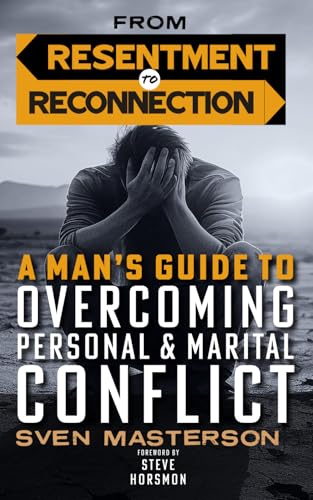
Books to deepen your understanding of this topic

Related searches
  • Why don't men deal with conflict?
  • Why don't guys deal with conflict?
  • Why don't husbands deal with conflict?
  • Why won't men deal with conflict?
  • Why does he deal with conflict?
  • Why won't he deal with conflict?
  • How can I help if he doesn't deal with conflict?
  • Is it normal that men don't deal with conflict?

People also wonder

  • Does it mean he doesn't care?

  • Can this change?

  • Is this learned?

  • How should I respond?

  • When is it a serious problem?

  • What does a healthy version look like?